


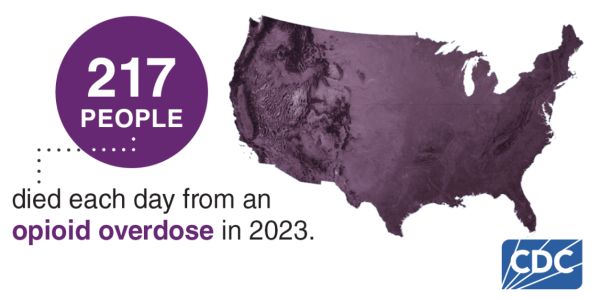
The number of opioid induced deaths has gone up significantly in the last 25 years in the United States. In 2023, nearly 80,000 people died from overdose on different types of opioids, most of them being morphine, codeine and fentanyl.
Opioids are pain killing medications. Common opioids people are often prescribed are fentanyl, codeine and morphine. Natural opioids are made up of poppy plant seeds. Synthetic opioids are man-made in a laboratory and are crafted to target the brain similarly to the way natural opioids do. Both produce pain-reliving effects; however, not all synthetic opioids are harmful.
Opioids have many different effects on the human body, all of them based on how long a person’s been using and how much. What is seen most is how opioid use slows down parts of the body. One of the most common side effects is constipation. Opioids slow down the digestive system by affecting the nerves that control gut mobility. This can lead to bloating, abdominal pain, and infrequent bowel movements. Not only do opioids impact the digestive system, but the brain also reacts heavily to opioid use. Opioids impact the parts of the brain that control someone’s memory, respiratory system, and their food intake. If these side effects go on for long enough, eventually it will lead to more severe health problems.
Fentanyl, for example, is a synthetically made opioid that most people think is illegal, but doctors prescribe it to people. It is the strongest opioid in the market, being 100 times more potent than morphine, and amounts as small as 2 milligrams can be fatal. Pharmaceutical fentanyl is often used to manage a patient’s pain during surgery. This is the type of fentanyl that is FDA-approved. Illegally produced fentanyl is often mixed with other types of illicit drugs such as cocaine to further increase its potency.
Morphine, another popular opioid prescribed to relieve severe pain, is commonly taken orally but also can be injected into a person’s arm. Injections, however, enter a person’s blood stream, which produces faster results. Regardless of how morphine is taken, it impacts a person’s mind and body. It produces euphoric effects, decreases hunger and can cause fatigue. More extreme side effects consist of hallucinations, chest pain, and seizures—some life-threatening. Morphine is a drug that should be taken at the same time daily, and a person should not stop taking it unless gradually leanedoff over time. Morphine is used in the production of heroin, which is commonly seen in the drug trade.
Codeine is used in the production of Tylenol-3. Codeine and acetaminophen, which are both ingredients in Tylenol-3, is used to relieve mild to moderate pain. This combination can cause breathing problems, especially when first prescribed or whenever a dosage increases. Taking over 4,000 milligrams of this a day can cause life threatening breathing problems, sedation, or coma. When taken, it changes the way the body senses pain and can reduce fevers. Tylenol-3 has low potential for dependency; however, addiction and dependency can be formed over time. Due to the fact it is considered less potent than other opioids, such as fentanyl or morphine, it is less sought after in drug trades.
If a person overdoses on an opioid, it can be fatal, but there is a way to reverse the symptoms. When someone overdoses on an opioid, there’s a possibility of their breath slowing or stopping altogether. Naloxone, also known as Narcan, can restore someone’s breathing. It comes in the form of an injection or a nasal spray. Naloxone effects only work when a person is overdosing on an opioid, however many other drugs are laced with opioids. Naloxone is fast-working, However, it is only a temporary solution. The effects only last in the human body for 30-90 minutes, so it is still best to seek proper medical attention.
In 2019, approximately 14% of all highschoolers nationwide reported misusing prescription opioids. Opioids aren’t a big problem at Griffith High School: “I believe the most prominent and dangerous drug in schools today are marijuana vapes,” Corporal Pete Ghrist said. “I’m proud to report that I have not run across any students with opioids in years.”
The number of students caught with opioids has decreased due to marijuana vapes becoming more popular.