

For most students, lunch is what affects the day, to fuel students’ minds and push them through until the end of the day. Students at Griffith High School said that there isn’t much change when it comes to their lunches, from the carbs to the often-served option of pizza.
Junior Emily Hernandez said, “I feel that lunches are mostly carbs. The meals feel all the same, they always serve pizza or nachos.”
Junior Mason Salazar said, “I feel like they sometimes understand what we want. But I think we need some more options instead of pizza all the time.”
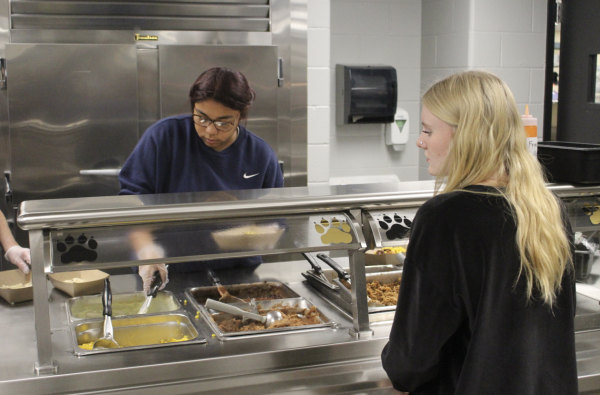
The lunch menu is on cycle having three different weeks and then starting over again, with food ranging from Pizza Crunchers to Walking Tacos to “Tornados,” adding an occasional new menu item here and there, but the items aren’t always frequent on the menu.
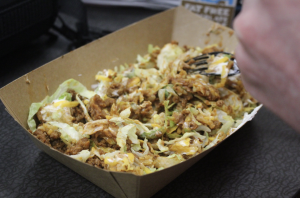
The lunches mainly consist of the main course, a hot or cold side, and milk. However, they don’t have much variability, leaving students with limited options, leading students to slowly discard lunches as a whole at times. The students are required to grab at least one vegetable or fruit when they receive lunch. However, most of those items end up in the share bins.
The “School Nutrition Program Manual” on the in.gov website states that all side dishes should be less than or equal to 200 calories and all entrées should be less than or equal to 350 calories. The cheese quesadilla in the cafeteria has 300 calories per serving and the cheese pizza has 250 calories per serving.
Students usually end up getting an extra meal if the student’s lunch account has enough money. For some, they have to eat whatever is given and finish the day out sometimes still hungry.
Junior Janiya Nelson said, “lunch impacts my day because if I don’t eat enough food, I feel weak and shaky for the rest of the day.” Salazar added that most of the time he doesn’t feel full and would need a bag or chips or a cookie.
According to USDA guidelines in the “Summary of Provisions in the Child Nutrition Programs” (2020-25), school lunch limits and dietary guidelines require at least 80% of the weekly grains offered in school lunch and breakfast to be whole grain-rich, sodium levels not exceeding 1,280 milligrams, added sugars not exceeding 10% of calories daily, but nationwide school lunches are exceeding the sugar limit by providing 11% on average.
Currently one of the school’s lunch items with the highest sodium count is the cheese quesadilla–out of the other popular options of cheese pizza, pepperoni pizza, chicken quesadilla, and Bosco sticks–with 670 milligrams of sodium.
Surprisingly, even with the added chicken or pepperoni on items, there is still a low protein count. The pepperoni pizza has 14 grams of protein, and the chicken quesadilla has 17 grams. While they have protein, the sodium levels are still high, with the pepperoni at 390 milligrams and the chicken quesadilla at 660 milligrams, nutritional facts provided by GPS Food Service Director Tiffiny Ulman.
In other countries, school lunches look completely different. Food in other countries is made fresh every day, while in the U.S. a lot of the food is processed, leaving students to rely on vegetables or fruit when they receive lunch. In Italy one lunch has fresh fish, pasta with tomato sauce, caprese salad, some grapes and a baguette. In France, students receive a slice of steak, fresh fruit and vegetables, and cheese.
Nelson said, “I feel like some of the food tastes processed, but it’s a school trying to feed an entire school.”