
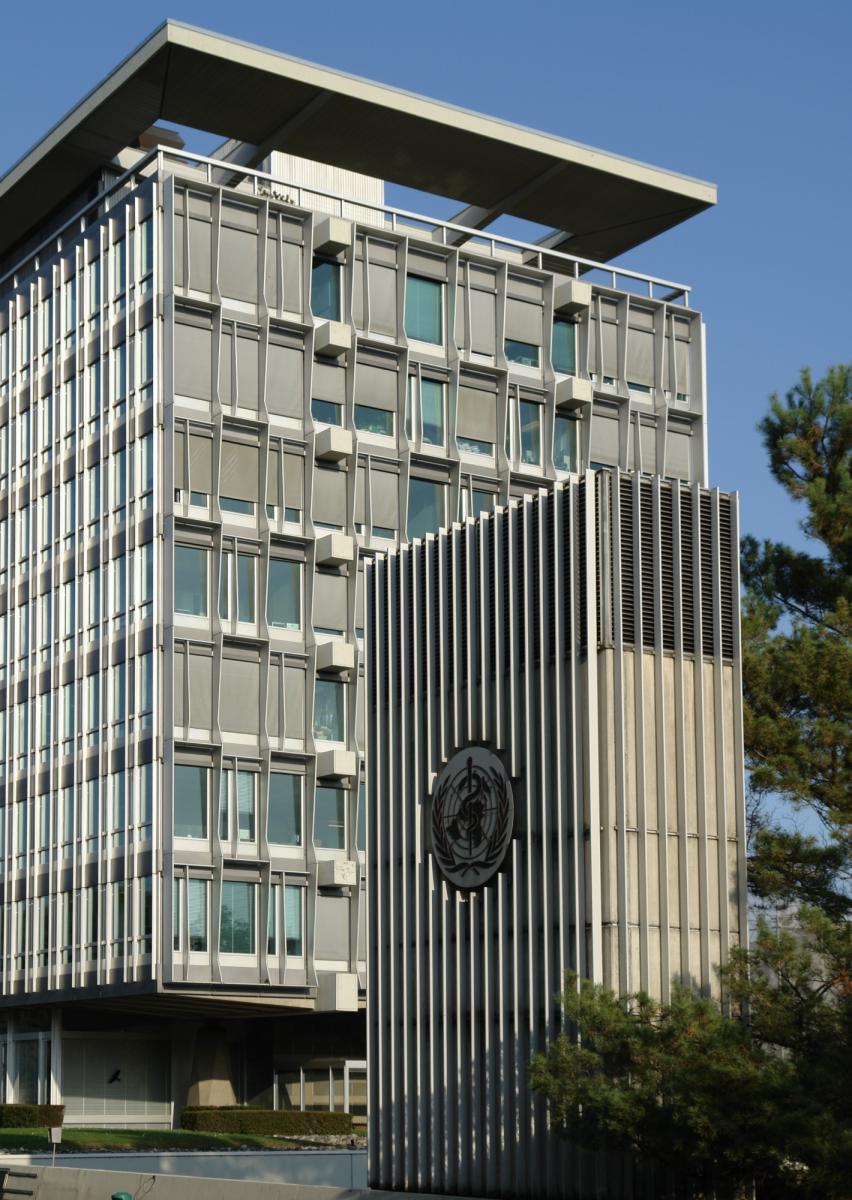
The Department of Health and Human Services announced Jan. 22 that the United States had completed its withdrawal from the World Health Organization.
The withdrawal follows a broader push to reduce foreign involvement. On Feb. 5, 2025, President Donald Trump issued Executive Order 14199, declaring the U.S. would end its involvement in 66 international organizations, 31 of which are associated with the United Nations.
“The WHO continues to demand unfairly onerous payments from the United States,” the official White House website states as a primary reason for the departure. “China, with a population of 1.4 billion, has 300 percent the population of the United States, yet contributes nearly 90 percent less to the WHO.”
The White House website also claims the WHO mishandled COVID-19 and cited its “inability to demonstrate independence from the inappropriate political influence of WHO member states.”
In response to the announcement, the National Institutes of Health published an article March 18, 2025, titled “The United States Withdrawal From the World Health Organization: Implications and Challenges.” The article critiques the administration’s plan to support global health through private action rather than the WHO.
“Despite its potential benefits, such ‘philanthro-capitalist’ models have raised concerns about limited transparency, less inclusive governance, and potential conflicts of interest,” the article states.
On Jan. 24, 2026, the WHO issued an official statement addressing the U.S. withdrawal. “As a founding member, the United States of America has contributed significantly to many of WHO’s greatest achievements,” the statement said. “We hope that in the future, the United States will return to active participation in WHO.”
From Feb. 2–7, the WHO held its 158th session of the Executive Board, an annual meeting in which member states discuss and implement policy. The United States did not participate, and the withdrawal was not explicitly mentioned during the session.
Despite the federal departure, some states have taken independent action. On Jan. 23, 2026, California Gov. Gavin Newsom announced the state would rejoin the WHO’s Global Outbreak Alert and Response Network at the state level. On Feb. 3, 2026, Illinois also announced plans to join the network.
Nikki Kinder, head nurse at Griffith High School, said the withdrawal could allow the U.S. to focus more on domestic health concerns. “Maybe we’ll have more money to focus on our health issues versus worldwide,” Kinder said.
Kinder also questioned whether state participation would significantly affect information access. “They’re not [going to] get any information any faster,” she said. “Maybe that was more of a statement from them. Probably more of a statement than anything.”
As of publication, Indiana Gov. Mike Braun has not responded to a request for comment, and the WHO has not responded to a request for an interview.